
The answer wasn't in a jar. It was in a 16-week trial of 65 women, and in a red nutrient most of us have never heard of.
The shelf that grows by a jar a year, and the mirror that never seems to hear about it.
The flat color at seven in the morning. The tight, dry feeling by four in the afternoon. The cheek that takes a second longer to spring back.
The label that says give it twelve weeks, on the jar that replaced the last one.
If that's your shelf, I know it well. It's mine too.
I did every step, in the right order, morning and night. I still couldn't point to the mirror and say what the money had done.
For years I blamed my mother's side of the family. Then I blamed plain bad luck.
It's an odd kind of lonely. At the dental office I manage, I'm the one the hygienists ask about sunscreen.
Anyone else looks at me and sees a woman of 57 with a few lines. I see nineteen years of homework, and no grade.
I got tired in a way sleep doesn't fix. Tired of leaning into the mirror every morning to see what had changed overnight.
Nineteen years of that.
Then I found out I had company.
I found them on a skincare forum. The women there were my age, give or take ten years.
I went in braced for the usual three. Drink more water. Wear your sunscreen. Get your sleep.
The first post I opened listed a routine, step by step. It was mine, down to the order.
One used a nine-dollar drugstore cream. One flew to another city for her facials.
Different shelves, different budgets. And the same sentence, post after post: I'm doing everything right.
When that many routines end in the same sentence, the routines aren't the cause.
Three weeks later I found the cause, in a paper from a university in Austria.
The paper on aging skin that I read four times
It was a review of the research on how skin ages, forty-five pages long.
Most of it was over my head. The title and the first line were not.
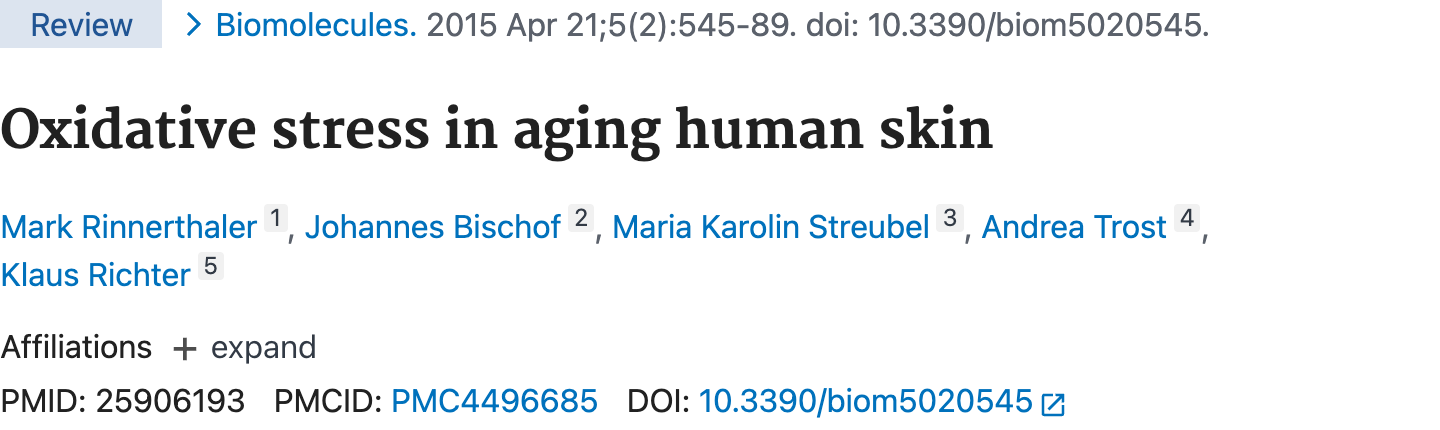
That first line says oxidative stress plays a major part in how skin ages. I had to look the term up. It means wear from unstable oxygen.
The review follows that wear into the skin's proteins, its oils and its barrier. For the aging that comes from outside the body, it points mostly at sunlight.
Nobody in that paper was selling a jar. It didn't name one product. You can read it yourself, with the number under the picture.
I read the summary four times, in my car, in the parking lot at work.
Wear from oxygen?
Inside my own skin?
Under every cream I owned?
I thought about the nineteen years. The last five alone had cost me a little over twelve thousand dollars.
I had a brochure for a laser package in my purse.
Was it possible my shelf was fine, and the trouble sat where no jar was built to go?
That night I read until one in the morning.
When I shut the laptop, my shelf looked different to me.
My skin routine was never the problem. Nobody had told me where skin ages.
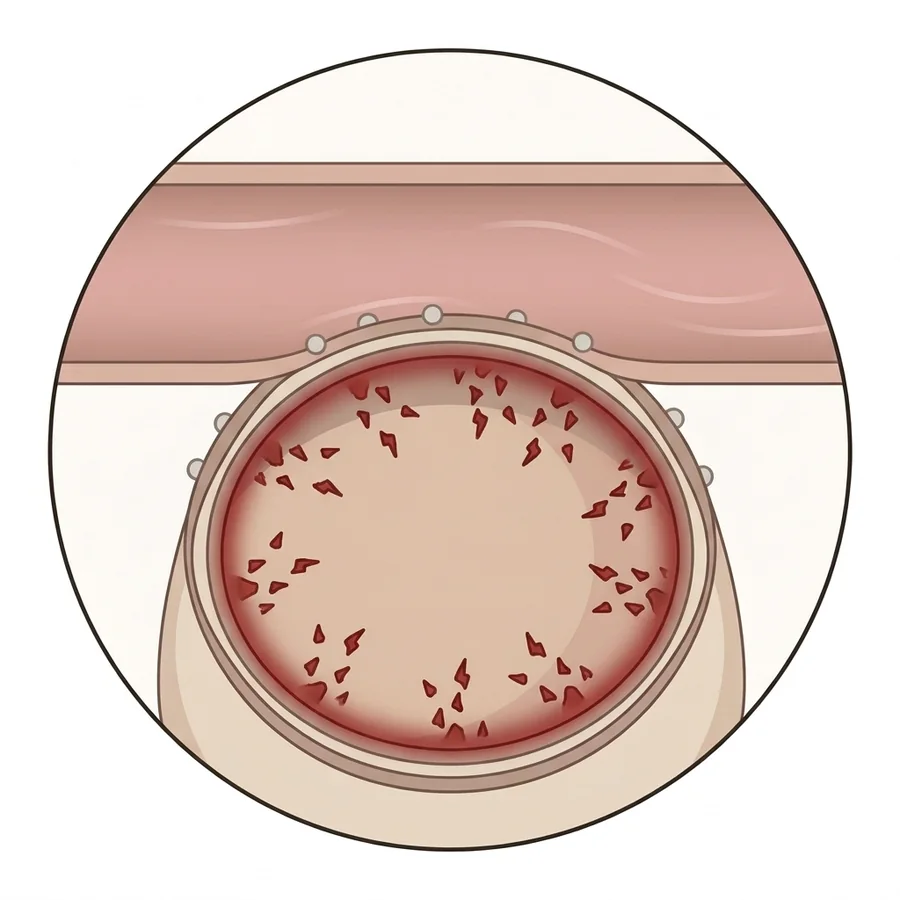
Your skin is built of cells, and every cell is wrapped in a thin wall of fat. Sunlight makes unstable oxygen molecules in your skin. So do city air, sugar, short nights and plain worry. Those molecules wear on the cell wall, and the wear shows up later as the three things in your mirror.
Every jar I owned worked from the outside in. The wear I was reading about starts on the inside.
So that was the layer my creams and serums never reach. My whole routine was on the other side of the wall.
My dermatologist went over my routine last year, jar by jar, and told me not to change a thing. She was right. Retinol, vitamin C, sunscreen: each one does its job. Not one of them was built to guard the inside of a cell wall.
Three changes in my skin, and the one cause under all three
The cheek that lost its spring. Collagen is the frame under your skin. Your body keeps enzymes whose job is to clear away old collagen, and unstable oxygen switches those enzymes on. Sunlight is a big part of that.
The tight, dry feeling by evening. Your skin keeps its water behind a thin seal of natural oils. Unstable oxygen wears on oils the way air turns butter. A worn seal lets water out sooner. My moisturizer adds water from the outside, and it does that well. Guarding the seal from the inside was never its job.
The flat color. Skin gets its warmth from the smallest blood vessels underneath it. When those vessels are under the same wear, less blood gets through. Then a face looks tired after eight good hours of sleep. Makeup can paint that warmth on from the outside. The real thing comes from underneath.
Three changes. One cause under all three. They got worse together because they share a root. And there I was, buying a different jar for each one.
What every product on my skin shelf does, and where each one stops
My retinol keeps the surface of my skin turning over, and I wouldn't give it up. Renewal is its job. Standing guard in a cell wall was never on its label.
My vitamin C serum is a true antioxidant. But vitamin C dissolves in water, and the wall of a cell is fat. The two don't mix.
My moisturizer holds water in for the day. My collagen hands my skin its building blocks. Neither one is a guard.
None of it was wrong. I want to say that plainly. Each thing on that shelf does what it says.
I went to buy an antioxidant for my skin, and came home with the wrong three
The next morning I did the obvious thing and drove to the drugstore.
Vitamin C. Vitamin E. A hair, skin and nails multivitamin with a sunburst on the box.
Sixty-one dollars, and I felt very clever all the way home.
Two months later, I couldn't name one thing those bottles had done for my face.
I began to wonder if I'd talked myself into a theory.
So I went back to the research with one question. Where does each antioxidant end up?
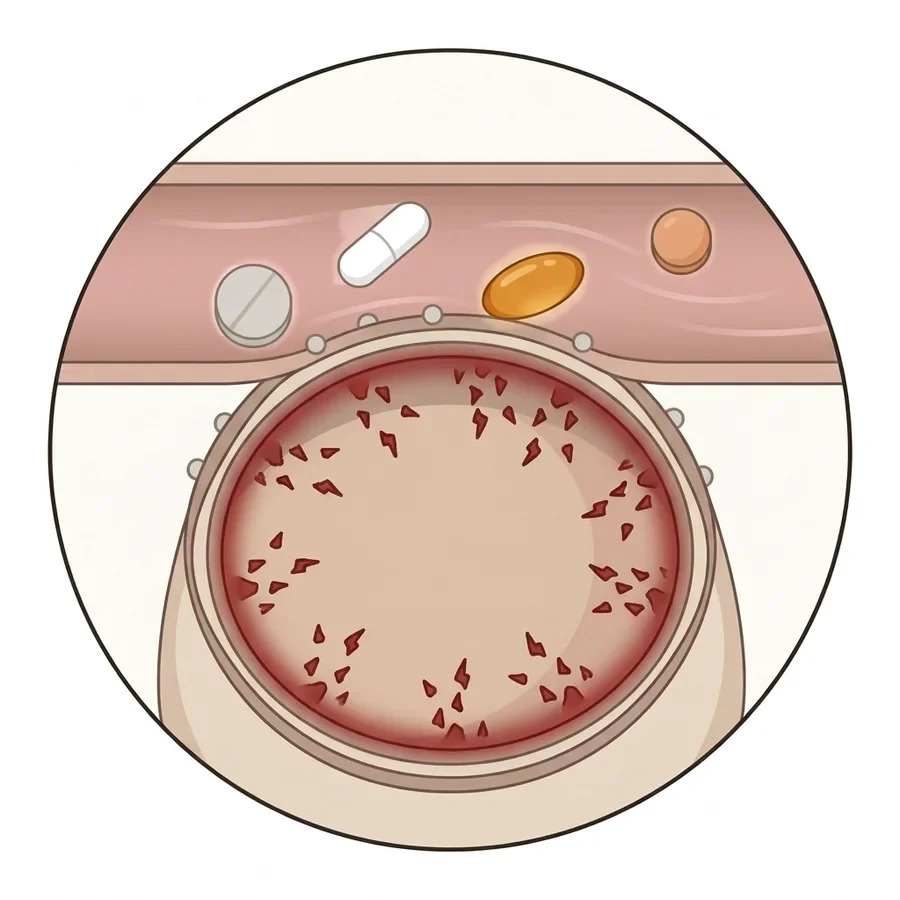
The vitamin C stayed out in the water, between the cells. The vitamin E came to rest on the outer face of the cell wall. The multivitamin had a pinch of each.
So I took a legal pad and wrote three lines. One, it had to dissolve in fat, because the cell wall is fat. Two, it had to reach through that wall, from one face to the other. Three, it had to come in an amount that had been tested in people.
I'm no scientist. I manage a dental office, and when a supplier makes a big claim, I ask for the paperwork.
The paperwork was a trial in women. Its title had a word in it I couldn't say.
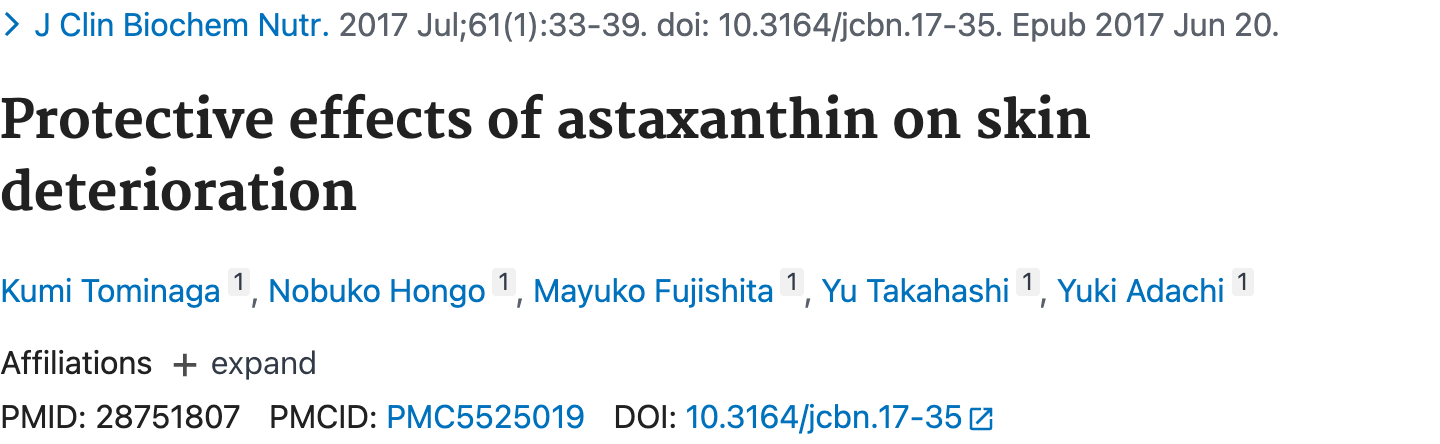
Sixty-five healthy women between 35 and 60. Sixteen weeks, from late summer into winter, when sun and dry air are hardest on skin.
Some swallowed a softgel with the red nutrient in it. The rest got a dummy softgel that looked the same.
By the end, the women on the dummy softgel had deeper lines and drier skin. The women on the real one held.
I'd read enough by then to be careful. Antioxidants in food are real, and I'm not giving up my blueberries. But the women were put in their groups by chance, so good eaters landed on both sides. One thing was different.
The women who held had taken one small red softgel a day. That was all. No new cream, and no new step.
One nutrient, taken with a meal, built to settle into the wall of a cell and stay there.
Astaxanthin, the red nutrient that guards your skin cells from the inside
I sounded it out at my desk, one piece at a time. Asta-ZAN-thin.
I'd read ingredient lists for nineteen years and had never once met that word. Most women haven't. Yet astaxanthin has been through more than 60 clinical studies, on skin and on the rest of the body.
It's the pigment that turns freshwater algae a deep red. Against one kind of unstable oxygen, lab tests put astaxanthin at 6,000 times the strength of vitamin C. Against vitamin E, 550 times. And it dissolves in fat, which was the first thing on my list.
Astaxanthin is a long molecule. It reaches through the cell wall, so it guards the inner side as well as the outer. And it calms the enzymes that eat collagen. None of that happens by lunch. The trial ran sixteen weeks for a reason.
The 16-week trial was paid for by a company that makes astaxanthin. That's common, and I still wanted a second opinion.
I found one run by skin doctors at a university in Seoul. Forty-four people took a small dose of astaxanthin together with collagen, or a dummy, for twelve weeks.
On the real thing, skin sprang back better and lost less water. In their skin samples, the signal to clear collagen went down, and the signal to build it went up.
I'd been putting collagen in my coffee for three years. I already had half of that study in my cup.
Astaxanthin was the other half, the half that guards. So the collagen you build holds. So does the collagen you buy.
One softgel with breakfast. Nothing on my shelf had to move.
That was nineteen years, explained. My routine was one layer short. Every jar worked on its own layer, and one layer had been left with no guard at all.
The first astaxanthin I bought for my skin failed three checks
I drove back to the drugstore, found a bottle with astaxanthin on the front, and carried it to the register like a trophy.
In the car I turned it over and read the back, the way I read a supplier's invoice. A bottle can come up short three ways. Mine managed all three.
One: where it comes from. The natural kind is made by microalgae. The synthetic kind is built from petrochemicals. The 16-week trial used the natural kind, and my bottle didn't say which one it was.
Two: how much is in it. My bottle had 4 mg in each softgel. The 16-week trial used 6 mg and 12 mg. One sign of stress in the skin's top layer rose on the dummy and on 6 mg, and stayed put on 12. So 12 was the dose I wanted, and that meant three softgels a day.
Three: whether anyone checked. One independent review checked astaxanthin products that had never been tested by an outside lab. About 64% fell short on potency. My bottle had a gold seal on the front and no lab named anywhere.
By that count, about two bottles in three would fail a test nobody made them take.
I put the bottle in the drawer with the rest, and I nearly gave up on the whole idea.
The astaxanthin I take for my skin passed all three checks
I did the comparing the slow way. The same legal pad, three columns, a row for every brand, and two evenings at the dining room table.
One row ended up with a mark in every column.
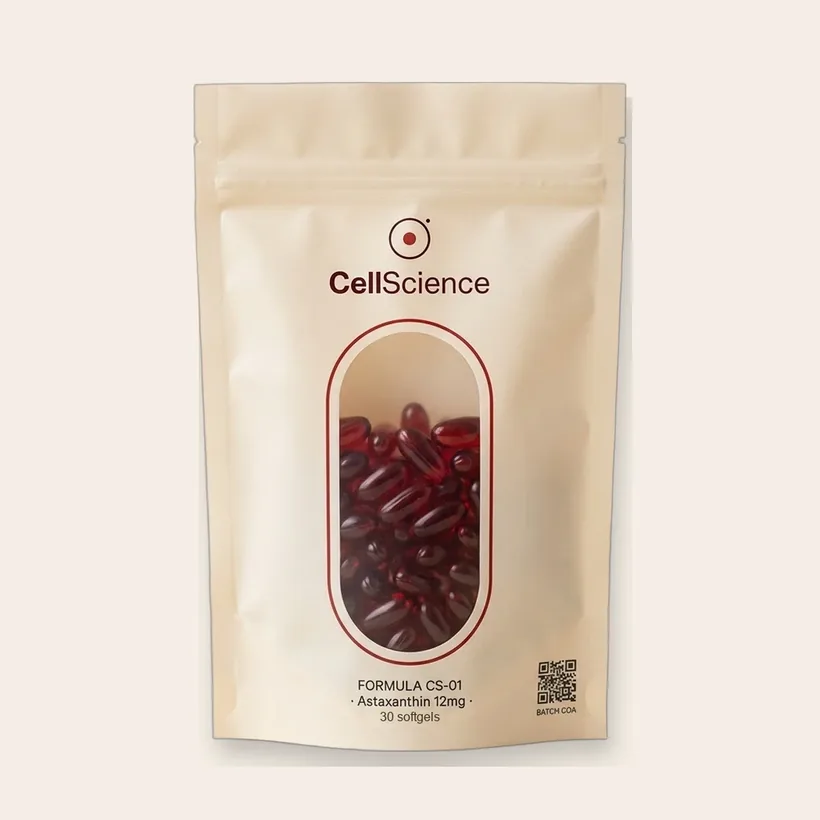
CellScience Astaxanthin.
12 mg in one softgel. The higher dose from the trial, with no counting out three.
Natural, from microalgae. The algae are raised in closed tanks, never in open ponds. Never synthetic.
Tested by an outside lab, batch by batch. Not a gold seal. A lab.
No heavy metals. One active ingredient, astaxanthin. Everything else in the softgel is there to hold the astaxanthin in place.
The work astaxanthin does in the cell wall has a name at CellScience. The Cell Shield. To me, The Cell Shield is the guard my skin routine never had.
On the CellScience page I went straight to the guarantee. It's the 30-Day Money-Back Guarantee, and the bag stays with you either way.
The bag came on a Thursday. I took the first softgel with my eggs, then did my whole skin routine, sunscreen included.
What my skin did, week by week
I've been oversold before, so I'll give you these weeks the way they went.
Days one and two: nothing. I checked the mirror both mornings. Then I remembered the trial ran sixteen weeks, and I felt a little silly.
Weeks one and two: still nothing in the mirror. My afternoons felt a little steadier, which I hadn't expected.
Week four. My skin stopped feeling tight by evening, which told me it was holding moisture through the day.
Week six was the first time anyone else said a word.
“You look rested,” my sister said at lunch. “Did you go somewhere?”
I had not gone anywhere. I had added one softgel to breakfast.
Week eight. The lines beside my eyes looked softer in the morning light, and my cheek had some spring back. Softer, not gone. I'm 57, and I look 57.
Week ten. A faint warm color came into my face, as if I'd spent the weekend outside. Astaxanthin is known for that glow.
The woman who has cut my hair for twelve years tipped my chin toward the window and asked what I'd changed.
Not one jar, I told her. It's a softgel I take with my eggs.
To the woman who has done everything right for her skin
If you're standing where I stood, here's what I wish a friend had told me. You can stop auditioning jars.
You're not too late at 62, and you're not too early at 41. A skin cell has the same wall at either age.
Don't expect a younger face. One softgel is not a facelift, and it is not a medicine. The human skin trials measured plainer things: wrinkle depth, moisture, and how well skin springs back.
It does not replace your sunscreen, either. Mine stays by the door.
What The Cell Shield does is guard what the rest of your skin routine builds.
Add another step to your skin routine, or protect the steps you have
The first way is the one I know by heart. A new serum in the spring, and a richer cream in the fall. The same lean into the mirror at seven, and the same sum at the end of the year.
The second way leaves your shelf the way it is and puts a guard under it. You swallow one softgel with a meal, and that's the whole change. The trials ran twelve to sixteen weeks, so give your mirror time. I felt it in my skin at night, weeks before I saw it in the mirror.
Why I ordered three bags of astaxanthin for my skin
One bag holds thirty softgels, a month of breakfasts. The trials ran three and four months, so I ordered three bags. The more bags in the order, the less each bag costs, and mine shipped free.
You don't have to start with three. The button on this page opens two ways: one bag, or a free trial. After two weeks the trial turns into a monthly plan until you cancel it.
I could order three because of the 30-Day Money-Back Guarantee. The thirty days start when the bag arrives. Take the softgel every day and judge it in week four. If you can't feel a difference, send one email before day thirty. If you're on the monthly plan, cancel it with one click that same day. You get your money back, and the bag you opened is yours to keep.
Why the softgel I take for my skin isn't sold on Amazon
Out of habit, I looked for CellScience Astaxanthin on Amazon. It isn't sold there. CellScience says it sells only through its own site. That's how it controls freshness and stands behind the 12 mg in every softgel.
CellScience doesn't make its softgel the cheap way. Growing algae in sealed tanks costs more than mixing a synthetic. Sending every batch to an outside lab costs more again. It does both, and I'd sooner pay for that than for a prettier jar.
If you have a drawer of skin products like mine
Four months ago I sat with my thumb over a button like the one on this page. I sat there a good while.
“You fall for it every time, Linda. You can't take one more letdown.”
I thought about the drawer of things that promised. I thought about the twelve thousand dollars, and the laser brochure in my purse.
Then I had a second thought. I couldn't face a twentieth year of the same shelf and the same mirror. I pressed the button with my heart going, half sure I'd be sorry.
Here's the short version, if you skipped down here.
Week four, a Tuesday. I got home from work and touched my cheek out of habit. It wasn't tight. I stood in the hall with my coat still on.
Week six. My sister, across a lunch table, asking where I'd been.
Week ten. A chin tipped toward the salon window, and a question I was glad to answer.
It didn't come all at once. It came in weeks, and a sixteen-week trial had taught me to wait.
My mornings are shorter now. I don't lean into the mirror. I don't read up on every new launch. I threw the laser brochure away.
Maybe you're thinking I got lucky. I thought so too, until I read that trial again. Those women weren't lucky. They had a guard.
My shelf still costs a little over two hundred dollars a month. Now it has a guard under it, and my mirror has heard.
My scoop of collagen still goes into my coffee every morning. When your bag arrives, put one softgel next to your cup, and let your collagen hold.
Whichever way you go, wear your sunscreen.
Linda
Answer 3 questions and SAVE UP TO $270!
Your result
Your answers match what CellScience Astaxanthin was made for.
Save $270 is the 6-bag price: $14.99 a bag instead of $59.99. Every order has the 30-Day Money-Back Guarantee.
A word on safety before you go. Ask your doctor first if you're pregnant or nursing, or if you take blood thinners or any other medication.
- Review. Oxidative stress in aging human skin. Biomolecules, 2015. PubMed 25906193
- Trial in 65 women, 16 weeks, against a placebo. Astaxanthin and skin that holds its moisture and its lines. Journal of Clinical Biochemistry and Nutrition, 2017. Paid for by a maker of astaxanthin. PubMed 28751807
- Trial in 44 people, 12 weeks, against a placebo. Astaxanthin taken together with collagen. Journal of Medicinal Food, 2014. PubMed 24955642