

It was a routine blood panel that told me my kidney numbers had moved. Nothing I felt did.
No ache. No swelling. Nothing at all.
The man on that printout and the man in the mirror did not match.
The explanation didn't come from an exam room. I found it on my own, late one night in my den, in one sentence of a study about aging kidneys. I thought it was nonsense. I read it a second time, slower.
I'll tell you the sentence further down. First, the six months I spent between two blood panels, because I'd bet you're spending yours the same way.
Why were my kidney numbers drifting when I felt fine?
What still bothers me is this.
I don't smoke. I quit beer years ago. I walk the dog every morning, rain or not. I take my two pills and I've kept every checkup since I retired. Nobody at the hardware store would guess.
And that is the whole problem. Kidneys don't ache. They don't complain. They keep quiet until a routine panel comes back with a number that has already moved. Then the next panel is six months away, and you wonder about it the whole time.
I went in with a page of questions. The plan I came home with fit on an index card.
“We'll check it again in six months.”
As if the thing to do about a moving number was to watch it move.
I did what anyone would. I went to work on it. Less salt. A water bottle everywhere. Every box in the pantry read for things I couldn't pronounce. A multivitamin with a long list, then a kidney blend with eleven herbs. I got so strict that my wife June said dinner tasted like the box it came in.
I was doing all of it. The needle still made my pulse jump. And when the lab's email landed, I braced before I opened it.
Maybe you know the thought. I've lived with this for months. So why does one email still knock the wind out of me?
One night I couldn't sleep, so I took the laptop to the den and typed my question into the search box.
What came back was a long thread of people saying my own thoughts out loud.
A retired mail carrier who had walked thirty years of routes and still got the same call I did.
A woman who kept every panel in a folder and said she dreaded opening it a little more each time.
A fellow who wrote that he felt healthier than his brother, and his brother's numbers were fine.
Different ages, different towns, different lives, and the same quiet number. If I wanted the reason, I would have to look past the thread.
I read until my eyes gave out.
Everyone in that thread described the same wait and the same dread. Not one of us could say why it was happening. The thread proved I had company. It couldn't tell me what was happening under my own skin.
The night I went looking for the reason
So around one in the morning I closed the thread and opened the studies themselves. The real ones, with charts I half followed and words I had to look up.
The next day I asked the pharmacist to help me read one. Everything I'd done was about what went in. Salt down, water up, better food. Not one of those things could get to the place the studies kept pointing at.
Here is the drawing I wish somebody had handed me with that first printout.
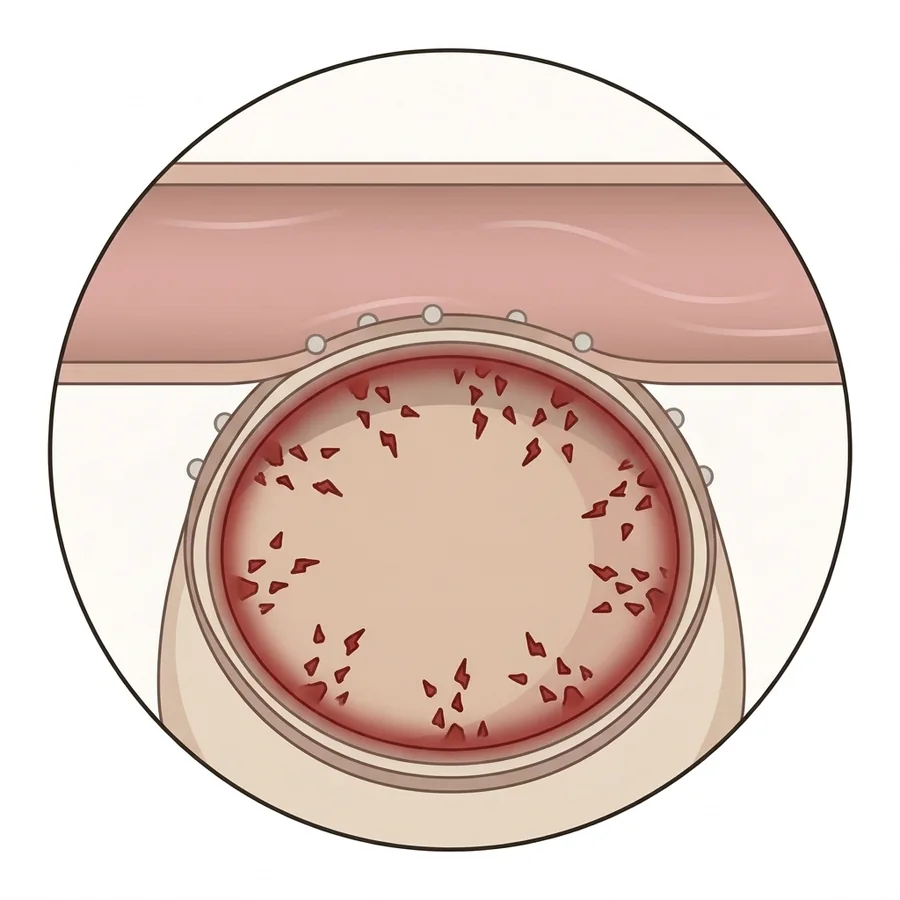
Bear with me here. This is where my own body started to make sense.
Every hour of the day, unstable oxygen molecules knock into your cells. They come from the food we eat now and the pace we live at. Each knock leaves a mark, and the marks add up.
That slow damage has a name. Oxidative stress.
Think of it as rust. Quiet rust on the inside of the cell, where you can't see it or feel it.
And your kidneys? They're among the hardest-working organs you own. They filter your blood day and night through vessels finer than a hair. Work like that leaves its share of rust. I'm not saying that to scare you. It's what the research says.
That's the sentence I promised you, more or less. The authors wrote it for scientists, so here it is in my words. The vessels inside an aging kidney carry a heavy load of oxidative stress, and that load builds year after year.
Nobody had ever said those two words to me. Not in any visit. Not out of meanness. A fifteen-minute appointment has room for the numbers and the next date, and not much else.
Where the rust happens, and why nothing I swallowed reached it
The rust forms inside the cell, where no rinse can reach it. And every cell is wrapped in a wall with two faces. One face likes water. The other likes fat.
Almost all my effort had landed in the bloodstream, or on one face of that wall, never on both.
Vitamin C stays out in the fluid around the cell. Vitamin E parks on the outside of the wall. The inner face, where the rust gathers, gets neither. My water bottle couldn't get there. Neither could my diet.
I gave it a name in my own head. The Antioxidant Blindspot: the one layer of the cell that nothing on my shelf was built to reach. Once you see it, you can't unsee it.
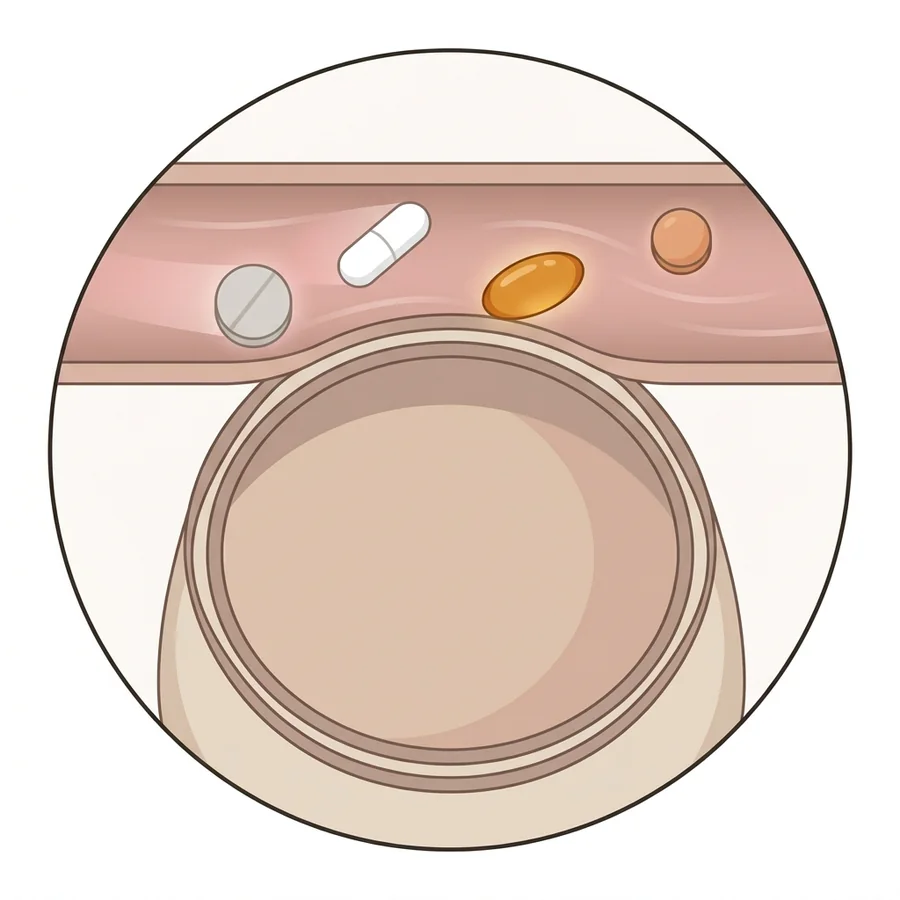
Hold my whole list up to that one idea and every line of it makes sense.
Less salt, more water.
Good for you, and I still do both. But they only change what flows through you. They do nothing about rust on the inside of a cell wall.
The multivitamin.
Most of what's in it dissolves in water, so your kidneys filter it out and flush it. It's extra work for the organ you're trying to help, and most of the doses are too small to matter anyway.
Vitamin C and vitamin E.
Real antioxidants, both of them. But each one is at home on one side only, water or fat. Think of painting a fence on one side and calling it done. Each guards one face of the wall and not the other.
I don't regret a single bottle. Not one of them was made for that layer.
Now the part I did not see coming.
Somewhere along the way I had decided the drift was my fault. Not strict enough. A burger somewhere. Not enough water.
It was one in the morning. I sat back in the desk chair in my den, and something in my chest that had been clenched since spring let go.
Trying harder was never the issue. Reach was. Everything I swallowed stopped at the door of the cell, and the rust was on the other side of it.
I'll admit I was angry. Six months of blaming myself, and the problem was a locked door nobody had told me about.
The next morning I started over, this time looking for something that could open that door.
I wrote down what the answer had to do. Get all the way inside the cell. Cover the fat side and the water side of its wall at the same time.
And my kidneys couldn't be asked to filter one more pill.
I checked the shelf at the pharmacy. Nearly all of it works one side only.
The red molecule that kept showing up
And then one odd molecule kept turning up in paper after paper. A deep red pigment that a freshwater microalga makes to protect itself. The same red that colors wild salmon.
Its name is astaxanthin.
The difference comes down to its shape.
Picture one molecule the exact width of the cell wall. One end sits in the fat, the other in the water. That is what this one does. It covers both sides at once, and it passes the barrier that leaves most vitamins stranded in the bloodstream. That is also how it reaches the cells of the eyes and the brain.
Of all the things I had read about in six months, this was the first one shaped like the problem.
This was no obscure corner of the internet, either.
More than 60 clinical studies have examined astaxanthin and what it does for the cell.
In lab measurements of antioxidant power, it quenches one kind of unstable oxygen about 6,000 times better than vitamin C. Vitamin E trails it by about 550 to one.
Then I got to the part I had stayed up for. My kidneys.
Remember why the research said the rust lands so hard on the kidneys. Those cells work around the clock and burn through oxygen doing it.
Astaxanthin goes to work right there, at the cell. It guards those cells, and it helps restore the fine supply lines that feed the kidneys, the eyes and the brain.
And it does more than mop up stray molecules. Researchers found that astaxanthin switches on a defense the cell already owns, a protective pathway called Nrf2. Think of it as the cell turning up its own shield.
In one lab study on kidney cells, astaxanthin lowered the oxidative stress inside the cells, and the signs of damage dropped with it. That was cells in a dish, not people, and I want to be straight about that.
That did it. I'd keep every appointment and every pill my doctor gave me. And I'd add one more habit, one I could start the same week.
And the feeling that came with it was not dread, for once.
Not a magic pill. I knew better than that. But for once I had something aimed at the right layer, and I could start it myself, that same week, without waiting on anyone.
What I check on the label now
I figured I'd grab any bottle. Astaxanthin is astaxanthin, I thought.
Wrong.
In one independent analysis, about 64 percent of astaxanthin products that had not been verified by a third party came up short on potency. More than half the shelf.
The second thing is where it comes from. The natural kind is grown by a microalga, the same one the human studies used. The synthetic kind begins life as petrochemicals. A label that doesn't say which is telling you something.
That was one worry. The other had kept me out of the supplement aisle for years. Would another pill mean more work for my kidneys?
I'd read the warnings people post about megadoses. I didn't want to add to the load.
The answer turned out to be simple. Most pills are water-soluble, so your kidneys filter every one of them out. Astaxanthin is fat-soluble. It rides in with your breakfast and goes to the cells, not through the filter.
Which left two worries. Paying for a softgel that is mostly oil. Or swallowing a blend of things I never asked for.
The softgel that answered my list
Those two worries are what finally made the choice for me.
CellScience Astaxanthin, 12 mg in one softgel, was the one that passed every test on my list. Natural astaxanthin from microalgae, grown in sealed tanks, one softgel a day.
They have a name for what one molecule does across the whole wall of a cell. The Cell Shield. After that night, it needed no explaining.
One active ingredient.
Astaxanthin, listed once, with nothing stacked behind it. No eleven-herb blend of the kind that makes a doctor roll her eyes. Every bad story I'd read about supplements and kidneys involved a blend with a long label. A label this short was easy to put in front of my doctor. I did, at my next visit. She read it and said to keep her posted. Take yours in as well.
The full 12 mg.
That is the amount the studies used. A lot of bottles print astaxanthin in big letters and put 4 or 6 mg inside, hoping nobody checks. This is 12 mg in one softgel, once a day.
Taken with a meal.
Astaxanthin needs a little fat to be absorbed, so you take it with breakfast, with eggs or yogurt or a spoon of peanut butter. One softgel with one meal, once a day. No morning and evening schedule to keep.
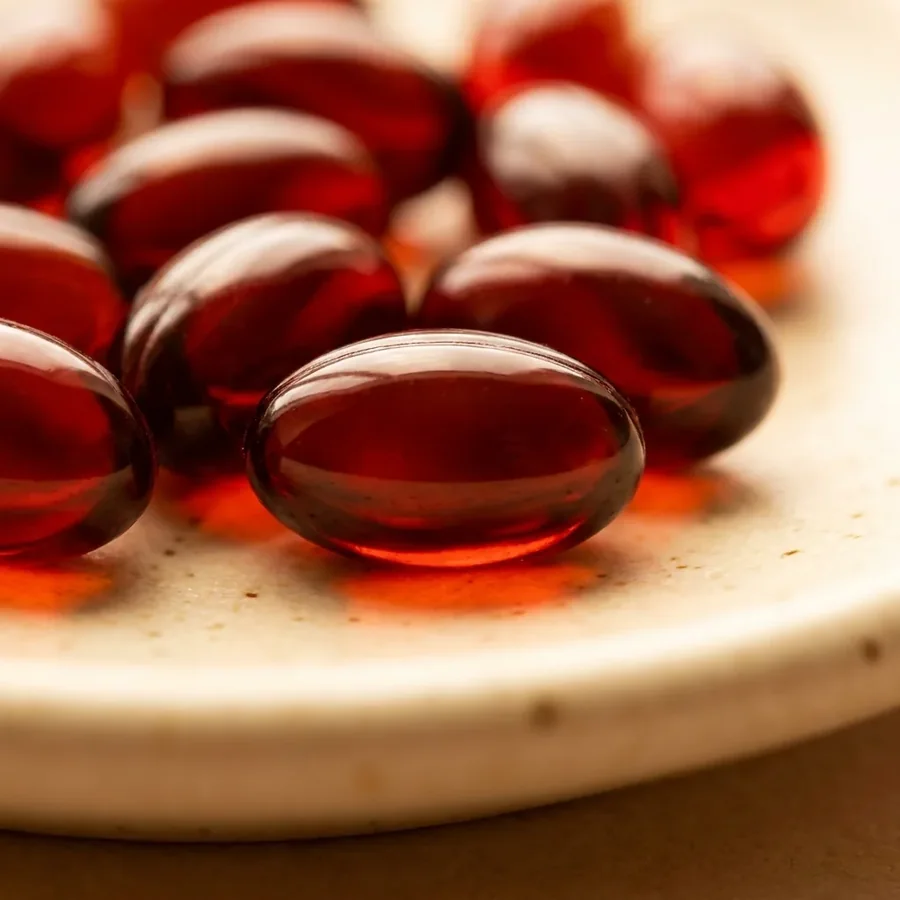
And the color. Open one and it's that deep, true red, the color of the algae it came from. Every batch is third-party lab tested. Grown in closed tanks, screened for heavy metals, and made in a cGMP-certified facility in the USA.
What I noticed, week by week
So I had the genuine article. Now came the hard part for a man like me, which is patience.
I'll keep this part plain. Big promises were the reason I'd stayed out of that aisle for years.
Weeks one and two.
Not much to report, which is what I expected.
You don't feel a shield go up. What changed first was the afternoons. By the end of week two I wasn't looking for the recliner at three o'clock. And I was doing something instead of waiting for a date.
Weeks three and four.
Here it got interesting.
By week four I noticed I was reading the box scores at night without turning on the second lamp. My eyes felt less dry by evening. I hadn't bought it for my eyes, and that was the first change I could point to.
Weeks five to eight.
Day to day, things felt easier. My stomach was calmer after dinner, less of that heavy feeling I had put down to age. In week six the lab's reminder email came, and I read it standing up, like any other email. The dread had gone quiet, because for the first time I was working on the part of the problem I could reach.
After that it was just part of the morning, like the dog's walk. Except this habit worked on something I can't see. The whole point is not missing days.
Now the honest part, and I mean every word. A softgel is not medicine. It doesn't stand in for a doctor, a test, or anything you've been prescribed. And nobody can promise you a lab result from a softgel. My six-month appointment stayed on the calendar, and I kept it. This is daily support for my cells, and my real care goes on exactly as before.
What I can tell you is what I felt, not what the lab printed.
The second panel came and went. I walked in without having spent the week dreading it, and I walked out with the next date, same as before. The numbers are my doctor's to read. The six months in between are mine.
For most of a year I'd let one number run my moods. I was the man who waited.
Adding one small habit changed how the whole fight felt. I had a part in it again.
And if you're my age, with good years planned, that feeling is everything. I have a boat to put in every May and grandkids who expect me at their games. I'm not spending those years bracing for a printout. My body never betrayed me. It was short one thing, in one place I couldn't reach. Now it isn't.
The choice I wish someone had put to me
A) Stay the course. Drink the water, read the labels, hold your breath each time the lab emails, and wait for the next date.
B) Or keep all of that, and add the one thing none of it does. One softgel a day that works on the inside of the cell wall, where none of my old habits could go.
And here's why trying it was an easy call for me.
CellScience backs it with a 30-Day Money-Back Guarantee. Take one softgel a day for a month and judge it yourself, not by an ad and not by me. If you notice nothing, ask for your money back and keep the bag.
Waiting another six months is the only move with nothing to show for it.
The steps, in order:
1) Today, you choose how to start on the next page. One bag, or the Try Before You Buy option, and your confirmation lands in your inbox in minutes.
2) This week, it ships, and a few days later it's at your door.
3) Then one softgel each morning with breakfast, and let the quiet work happen.
Your next panel is already on the calendar. Go. Tell your doctor exactly what you take. The win isn't a number anyone promised you. It's sitting down in that chair knowing you spent the six months doing something, not bracing.
Day 30. If you feel no different, one email gets your money back under the same 30-Day Money-Back Guarantee. Keep the bag.
If you're still reading, I think I know what brought you here. You're tired of watching a number and waiting.
This is the something you can do.
P.S. One question nagged at me for weeks. If it's this simple, why did nobody in a white coat mention it? Here's where I landed. A doctor's job is to read the numbers, watch the trend, and write the prescriptions that medicine has. That's real work and I lean on it. But nothing in that job covers what a cell needs between appointments. There's no prescription pad for it. That part sits at home, on the breakfast table, and it was always mine. I just hadn't been told.
A last word, because I'd want someone to tell me. Astaxanthin is generally well tolerated. Even so, talk to your doctor or your pharmacist before you start if you take blood thinners or have a diagnosed kidney condition. Same if you take any medication, or if you're pregnant or nursing. This sits beside your care. It doesn't replace it.
- Review. Oxidative stress and inflammation in the blood vessels of the aging kidney. Acta Physiologica Hungarica, 2007. PubMed 17444279
- Lab study on kidney cells, not people. Astaxanthin and the Nrf2 defense pathway in kidney cells under high sugar. Marine Drugs, 2018. PubMed 29621130